
 Sara McKenney
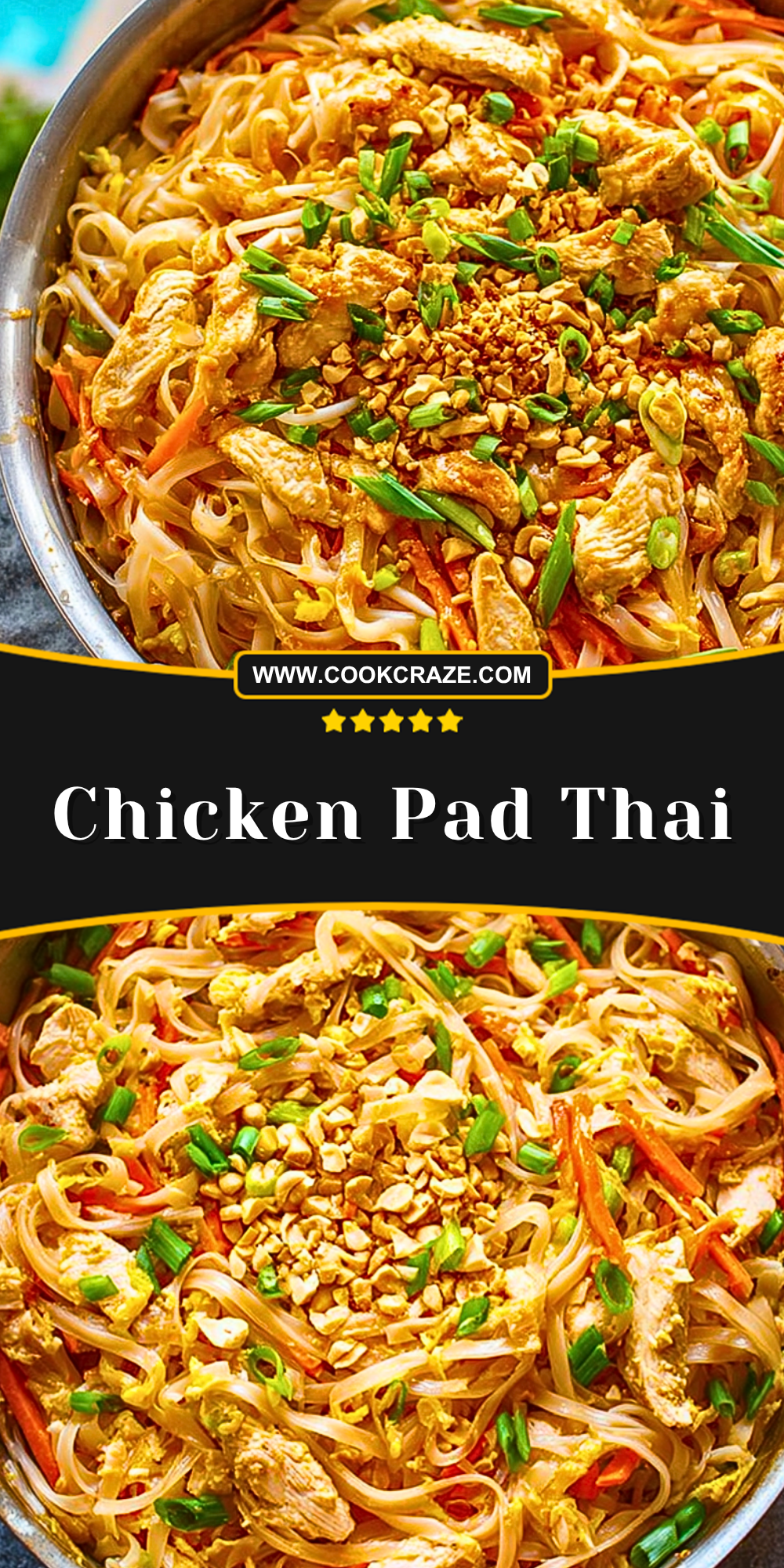
A steaming plate of Chicken Pad Thai brings together everything you crave in a comforting, flavor-packed dish—tender strips of chicken, silky rice noodles, crisp vegetables, and a tangy-sweet sauce that clings to every bite. The balance of textures and flavors makes it irresistible, from the crunch of crushed peanuts to the fresh pop of green onions.
WANT TO SAVE THIS RECIPE?
Just enter your email and get it sent to your inbox!
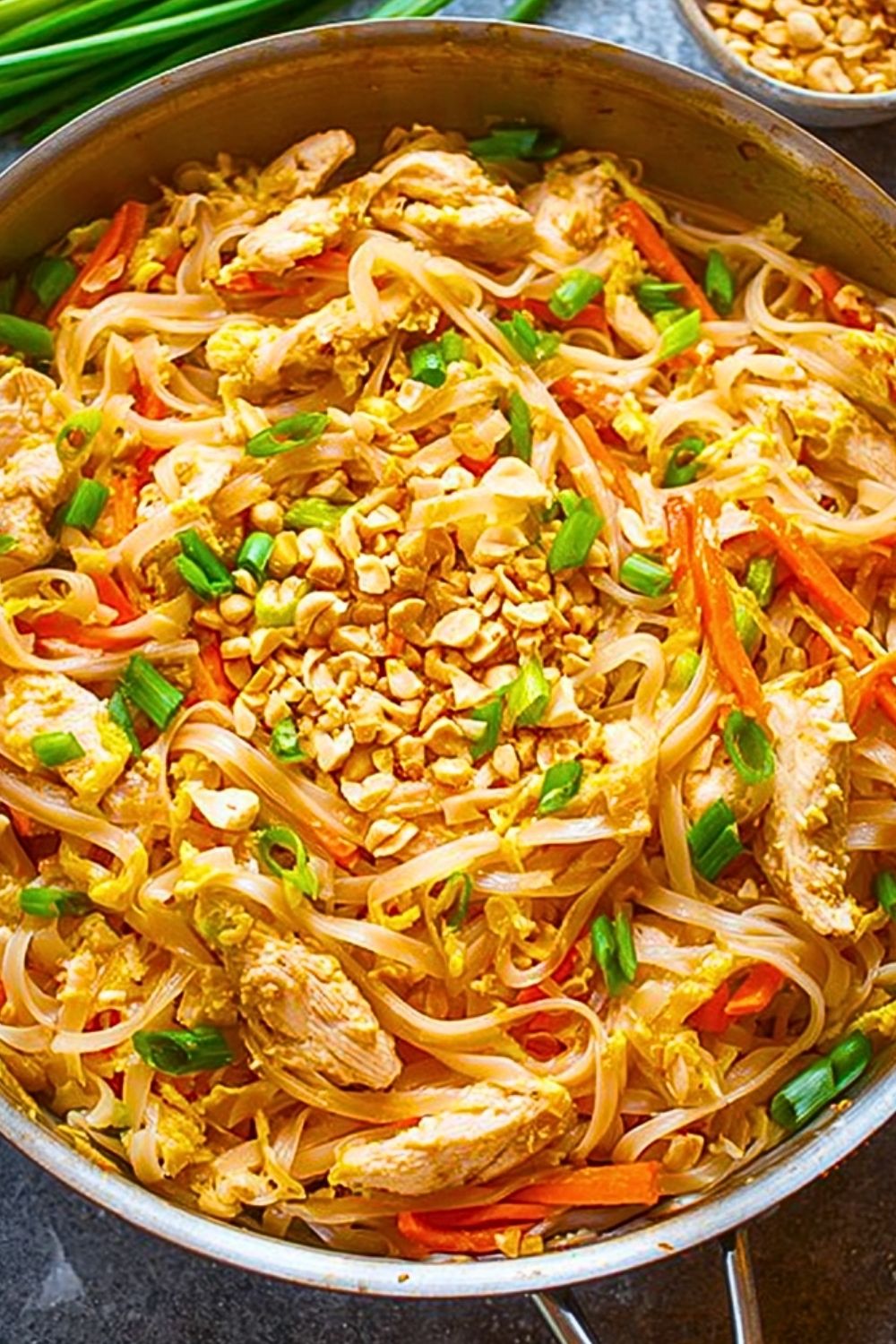
This classic Thai favorite is surprisingly simple to recreate at home, delivering restaurant-quality results with everyday ingredients. Whether you’re cooking for a quick weeknight dinner or impressing guests, this dish offers a vibrant, satisfying experience that feels both indulgent and wholesome.
Why You’ll Love This Chicken Pad Thai
This Chicken Pad Thai stands out for its perfect harmony of sweet, savory, and slightly tangy flavors. It’s quick to prepare, making it ideal for busy evenings, yet impressive enough for special occasions. The recipe is versatile, allowing you to adjust spice levels, swap proteins, or add extra vegetables based on your preferences. Plus, it’s a one-pan meal, which means less cleanup and more time to enjoy your food.
Preparation Phase & Tools to Use (Essential Tools and Equipment, and the Importance of Each Tool)
To make Chicken Pad Thai efficiently, having the right tools makes all the difference. A large wok or wide skillet is essential for even heat distribution and quick stir-frying, preventing the noodles from sticking together. Tongs or a spatula help toss the ingredients smoothly without breaking the noodles. A sharp knife ensures clean, precise cuts of chicken and vegetables, which promotes even cooking. A mixing bowl is useful for preparing the sauce ahead of time, ensuring a seamless cooking process once you start. Each tool plays a role in maintaining the dish’s texture and flavor balance.
Preparation Tips
Before you begin cooking, prep all your ingredients in advance, as Pad Thai cooks quickly once it hits the pan. Soak the rice noodles just until pliable to avoid mushy results later. Slice the chicken thinly so it cooks evenly and remains tender. Keep your sauce well-mixed and within reach, and cook on medium-high heat to achieve that signature stir-fry flavor without overcooking the ingredients.
Ingredients for this Chicken Pad Thai
To achieve the authentic flavor and texture of Chicken Pad Thai, each ingredient plays a crucial role. Here’s everything you’ll need:
For the Noodles & Protein:
- 8 oz (225g) flat rice noodles
- 2 boneless, skinless chicken breasts (thinly sliced)
- 2 large eggs
For the Vegetables:
- 1 cup bean sprouts
- 1 medium carrot (julienned)
- 3 green onions (chopped, whites and greens separated)
- 2 cloves garlic (minced)
For the Sauce:
- 3 tbsp fish sauce
- 2 tbsp tamarind paste
- 2 tbsp brown sugar (or palm sugar for authenticity)
- 1 tbsp soy sauce
- 1–2 tsp chili paste (adjust to taste)
For Cooking:
- 2 tbsp vegetable oil (or peanut oil)
For Garnish & Serving:
- 1/3 cup crushed peanuts
- Lime wedges
- Fresh cilantro (optional)
- Extra chili flakes (optional)
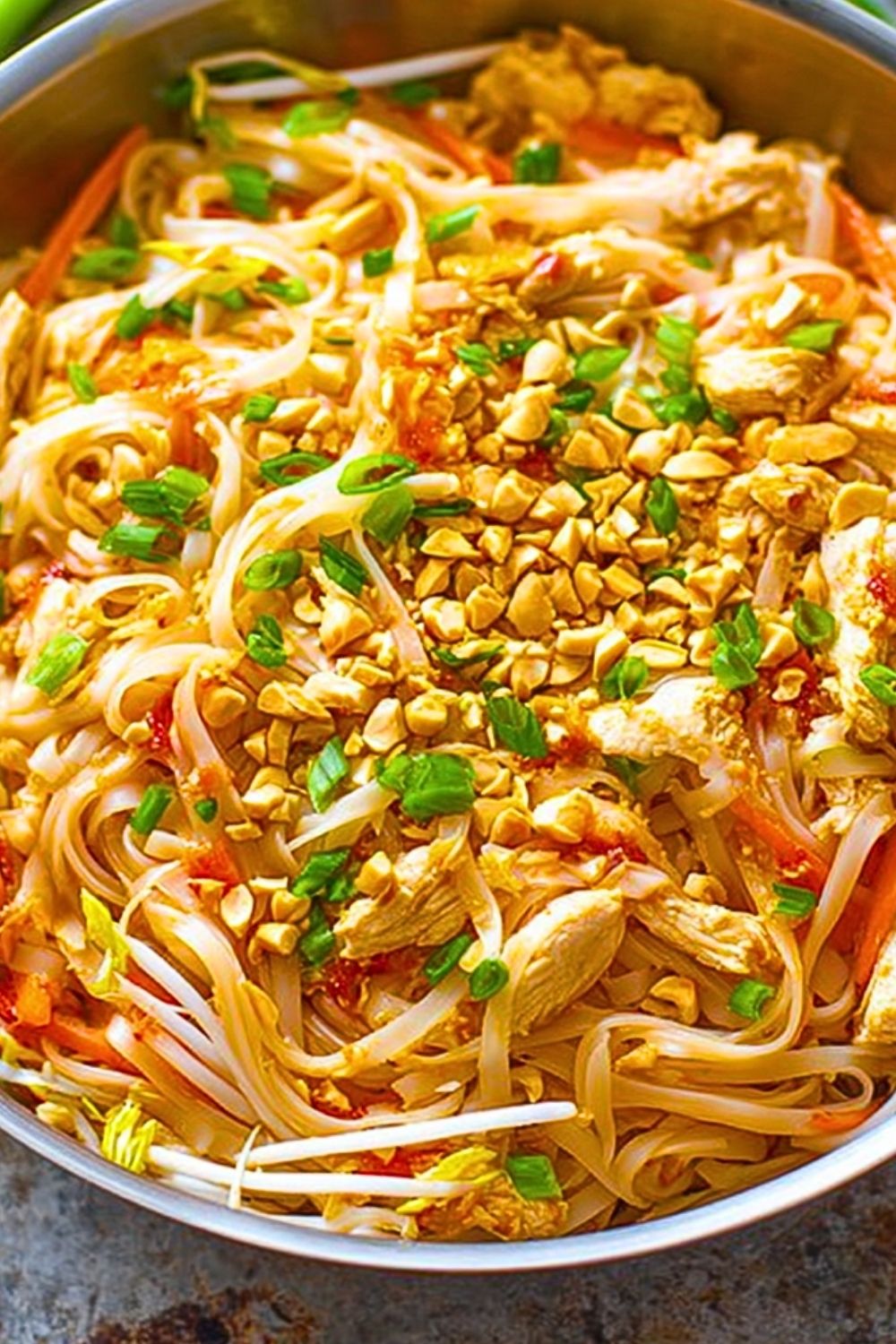
Step 1: Prepare the Rice Noodles
Place the rice noodles in a large bowl and cover them with warm (not boiling) water. Let them soak for 20–30 minutes, or until they are soft but still slightly firm to the touch. Drain thoroughly and set aside. Avoid over-soaking, as the noodles will continue cooking in the pan later.
Step 2: Prepare the Sauce
In a small mixing bowl, combine fish sauce, tamarind paste, brown sugar, soy sauce, and chili paste. Stir until the sugar dissolves completely and the mixture becomes smooth. Taste and adjust the balance—add more sugar for sweetness or fish sauce for saltiness if needed. Set aside for later use.
Step 3: Cook the Chicken
Heat 1 tablespoon of oil in a large wok or skillet over medium-high heat. Add the sliced chicken and cook for 4–5 minutes, stirring occasionally, until fully cooked and lightly golden. Remove the chicken from the pan and set aside to prevent overcooking.
Step 4: Sauté Aromatics and Vegetables
In the same pan, add the remaining tablespoon of oil. Toss in the minced garlic and the white parts of the green onions. Stir-fry for about 30 seconds until fragrant. Add the julienned carrots and cook for another 1–2 minutes until slightly softened but still crisp.
Step 5: Scramble the Eggs
Push the vegetables to one side of the pan. Crack the eggs directly into the empty space and scramble them gently until just set. Once cooked, mix them with the vegetables.
Step 6: Add Noodles and Sauce
Add the drained noodles to the pan, followed by the cooked chicken. Pour the prepared sauce over everything. Using tongs, gently toss and stir-fry the mixture for 2–3 minutes, ensuring the noodles are evenly coated and heated through.
Step 7: Add Bean Sprouts and Finish Cooking
Add the bean sprouts and green onion greens to the pan. Toss everything together for another 1–2 minutes. The bean sprouts should remain slightly crisp for the best texture.
Step 8: Adjust Flavor and Texture
Taste the dish and adjust seasoning if necessary. Add a splash of fish sauce for more depth, lime juice for brightness, or chili paste for heat. If the noodles seem too dry, add a tablespoon of water to loosen them.
Step 9: Plate and Garnish
Transfer the Chicken Pad Thai to serving plates. Top generously with crushed peanuts, fresh cilantro (if using), and a squeeze of lime juice. Sprinkle extra chili flakes if you prefer a spicier kick.
Step 10: Serve Immediately
Serve hot for the best flavor and texture. Pad Thai is best enjoyed fresh, when the noodles are tender and the flavors are vibrant and well-balanced.
Notes
Chicken Pad Thai is all about balance—sweet, salty, sour, and a hint of heat working together in harmony. The key to mastering this dish lies in controlling moisture and timing. Rice noodles can quickly turn from perfectly tender to overly soft if over-soaked or overcooked, so keeping a close eye on texture is essential. Using high heat ensures a quick stir-fry that locks in flavor without steaming the ingredients. If you prefer a more authentic taste, palm sugar and tamarind pulp will elevate the sauce significantly. Adjusting flavors at the end is not just allowed—it’s encouraged, as Pad Thai is often customized to personal taste.
Watch Out for These Mistakes While Cooking
One common mistake is over-soaking the noodles, which leads to a mushy final dish. Another is overcrowding the pan, which prevents proper stir-frying and results in steaming instead. Skipping mise en place (preparing ingredients beforehand) can also cause issues, as the cooking process moves quickly. Adding the sauce too early or too late can affect how well it coats the noodles. Lastly, under-seasoning or failing to taste and adjust at the end can leave the dish flat rather than vibrant.
Storage Instructions
If you have leftovers, allow the Chicken Pad Thai to cool completely before storing it in an airtight container. It can be refrigerated for up to 3 days. When reheating, use a skillet over medium heat with a splash of water to help loosen the noodles and restore their texture. Avoid microwaving for too long, as it can dry out the dish or make the noodles rubbery. Freezing is not recommended, as rice noodles tend to lose their structure after thawing.
Estimated Nutrition
Per serving (approximate values):
- Calories: 450–550 kcal
- Protein: 28–35g
- Carbohydrates: 55–65g
- Fat: 12–18g
- Saturated Fat: 3–5g
- Fiber: 3–5g
- Sugar: 8–12g
- Sodium: 800–1000mg
Frequently Asked Questions
Can I use a different protein instead of chicken?
Absolutely. Shrimp, tofu, beef, or even a mix of proteins can be used. Just adjust cooking times accordingly to avoid overcooking.
What can I substitute for tamarind paste?
If tamarind paste isn’t available, a mixture of lime juice and a small amount of brown sugar can mimic its tangy-sweet profile, though the flavor will be slightly different.
Is Pad Thai gluten-free?
It can be, as rice noodles are naturally gluten-free. Just ensure your soy sauce and other condiments are certified gluten-free.
How do I prevent noodles from sticking together?
Toss the soaked noodles lightly with a bit of oil before cooking, and make sure your pan is hot enough to keep them moving during stir-frying.
Can I make this dish vegetarian?
Yes, simply replace the chicken with tofu or additional vegetables and use soy sauce instead of fish sauce, or opt for a vegetarian fish sauce alternative.
Why does my Pad Thai taste bland?
It likely needs more balance. Try adding a bit more fish sauce for saltiness, sugar for sweetness, or lime juice for acidity.
Can I prepare the sauce ahead of time?
Yes, the sauce can be mixed in advance and stored in the refrigerator for up to a week, making meal prep even quicker.
What’s the best way to reheat Pad Thai?
Reheat it in a skillet with a splash of water or oil over medium heat, stirring gently until warmed through. This helps maintain the texture better than microwaving.
Conclusion
Chicken Pad Thai is a timeless dish that combines simplicity with bold, unforgettable flavors. With the right preparation and attention to detail, you can recreate this restaurant favorite in your own kitchen. Whether you stick to the classic method or customize it to suit your taste, this dish is sure to become a go-to meal that delivers both comfort and excitement in every bite.
Chicken Pad Thai
- Total Time: 40 minutes
- Yield: 4 servings
Description
Craving a quick dinner that’s packed with bold flavors and satisfying textures? This Chicken Pad Thai is the perfect easy recipe for busy weeknights or when you want restaurant-quality food at home. Featuring tender chicken, soft rice noodles, crunchy vegetables, and a perfectly balanced sweet-savory sauce, this dish fits right into your list of go-to dinner ideas, food ideas, and even healthy-ish comfort meals.
Ingredients
8 oz flat rice noodles
2 chicken breasts thinly sliced
2 large eggs
1 cup bean sprouts
1 medium carrot julienned
3 green onions chopped
2 cloves garlic minced
3 tbsp fish sauce
2 tbsp tamarind paste
2 tbsp brown sugar
1 tbsp soy sauce
1 tsp chili paste
2 tbsp vegetable oil
1/3 cup crushed peanuts
1 lime cut into wedges
2 tbsp fresh cilantro optional
Instructions
1. Soak rice noodles in warm water for 20–30 minutes until pliable, then drain.
2. Mix fish sauce, tamarind paste, brown sugar, soy sauce, and chili paste.
3. Heat oil and cook chicken until fully done, then remove.
4. Sauté garlic and green onions, then add carrots.
5. Scramble eggs and combine with vegetables.
6. Add noodles and chicken back to pan.
7. Pour sauce and toss well.
8. Add bean sprouts and cook briefly.
9. Adjust seasoning to taste.
10. Garnish and serve hot.
Notes
Do not over-soak the noodles or they will become mushy during cooking.
Cook on high heat to achieve authentic stir-fry texture and flavor.
Always taste and adjust sauce at the end for the perfect balance.
- Prep Time: 25 minutes
- Cook Time: 15 minutes
- Category: Main Course
- Method: Stir-Fry
- Cuisine: Thai
Nutrition
- Serving Size: 1 serving
- Calories: 500
- Sugar: 10g
- Sodium: 900mg
- Fat: 15g
- Saturated Fat: 4g
- Unsaturated Fat: 9g
- Trans Fat: 0g
- Carbohydrates: 60g
- Fiber: 4g
- Protein: 30g
- Cholesterol: 120mg
Keywords: chicken pad thai, easy dinner, quick dinner, noodle recipe, thai food, homemade takeout