
 Sara McKenney

A traditional Greek Horiatiki salad is the very essence of Mediterranean freshness and simplicity. This vibrant, rustic salad bursts with the bold flavors of ripe tomatoes, crisp cucumbers, zesty red onions, Kalamata olives, and creamy cubes of feta cheese. Drenched in a rich drizzle of extra virgin olive oil and sprinkled with oregano, this dish captures the spirit of Greek village cooking in every bite.
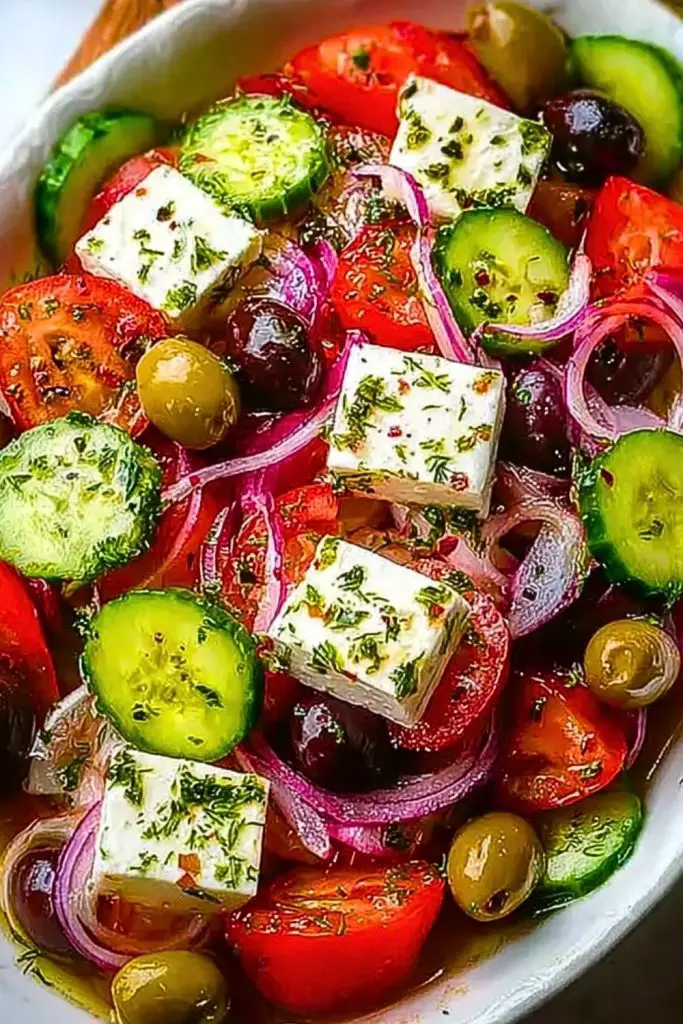
Horiatiki salad is more than just a side—it’s a celebration of seasonal produce and honest ingredients. It requires no lettuce or leafy greens; instead, the raw vegetables are allowed to shine in their natural glory. Whether enjoyed as a light lunch on a sunny afternoon or a refreshing companion to grilled meats, this salad is a timeless staple that brings people together around the table.
Why You’ll Love This Traditional Greek Horiatiki Salad
This dish is a masterclass in balance. Each ingredient offers a different texture and flavor: juicy tomatoes, crunchy cucumbers, sharp onions, briny olives, and velvety feta. It comes together in just minutes and doesn’t require any cooking. Perfect for warm weather, this salad is not only refreshing but also packed with nutrients and heart-healthy fats. Plus, it’s naturally vegetarian and gluten-free.
Preparation Phase & Tools to Use
To prepare an authentic Greek Horiatiki salad, you need just a few basic kitchen tools: a sharp chef’s knife for precise slicing, a large salad bowl to mix and serve, a small whisk or fork to stir the dressing, and a cutting board. The knife is crucial for evenly slicing the tomatoes, cucumbers, and onions. The large bowl ensures all the ingredients can be tossed together without spilling, while a whisk or fork helps emulsify the olive oil and vinegar (if using) for an evenly coated finish.
Preparation Tips
Choose the freshest and ripest vegetables you can find—this salad relies heavily on the quality of the ingredients. Use firm cucumbers and juicy, sweet tomatoes, preferably heirloom or vine-ripened. Slice the red onion thinly and soak it briefly in cold water to mellow its bite if needed. Always use high-quality feta made from sheep’s milk for the most authentic flavor, and never crumble it—cut it into generous cubes. Don’t skip the olive oil; use a robust Greek extra virgin olive oil for the dressing, and don’t be shy with the oregano. Simplicity is key, so let the ingredients speak for themselves.
Ingredients for Traditional Greek Horiatiki Salad
- 4 ripe tomatoes (heirloom or vine-ripened), cut into wedges or chunks
- 1 large cucumber, sliced into thick rounds or half-moons
- 1 small red onion, thinly sliced into rings
- 1 cup cherry tomatoes (optional), halved for variety in texture
- 3/4 cup Kalamata olives (with pits for authenticity, pitted if preferred)
- 200g (about 7 oz) Greek feta cheese, cut into cubes or slabs
- 1/4 cup extra virgin olive oil (preferably Greek)
- 1 teaspoon dried oregano
- Fresh parsley or oregano for garnish (optional)
- Sea salt and freshly ground black pepper to taste
- 1 tablespoon red wine vinegar (optional, traditional in some regions)
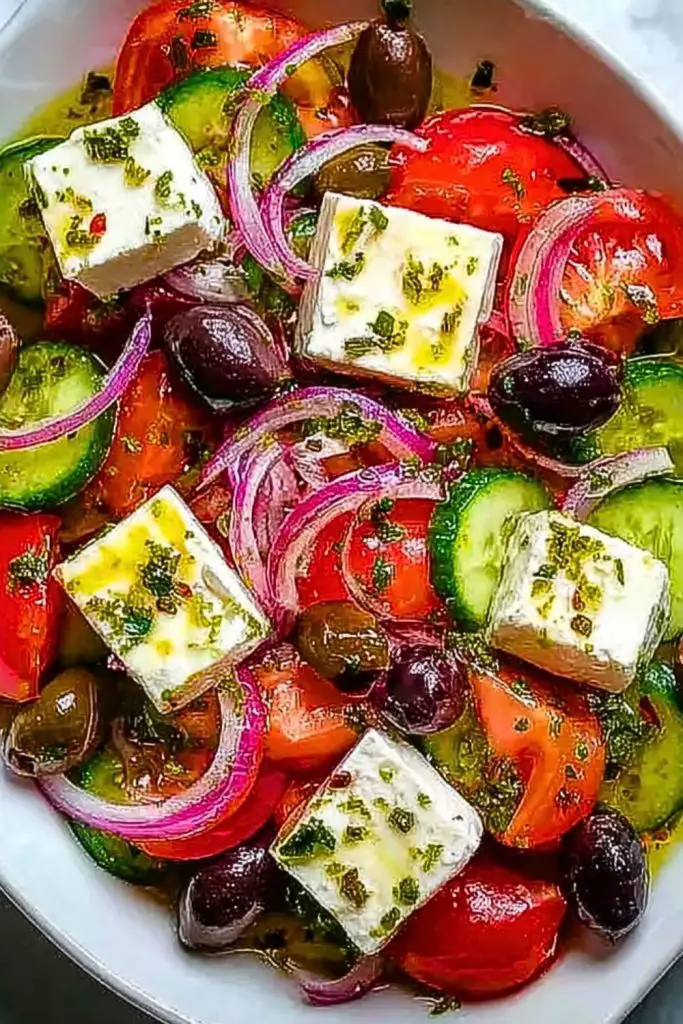
Step 1: Prep the Vegetables
Wash and dry all the vegetables thoroughly. Cut the tomatoes into generous wedges or chunks to maintain their juiciness. Slice the cucumber into thick rounds, or halve the rounds for smaller bites. Thinly slice the red onion into rings. If the onion is too sharp, soak it in ice water for 10 minutes and drain before using. Halve the cherry tomatoes if you’re including them for extra color and texture.
Step 2: Layer the Salad
In a large, shallow salad bowl or serving platter, begin layering the vegetables. Start with the cucumber and tomato chunks as the base. Scatter the red onion rings and halved cherry tomatoes on top. Add the Kalamata olives throughout for a salty, briny flavor burst.
Step 3: Add the Feta Cheese
Place cubes or slabs of feta cheese on top of the vegetables. Do not crumble the feta; the traditional style is to keep it in blocks that rest on top of the salad. This allows everyone to take a piece as they serve themselves, maintaining the rustic charm of the dish.
Step 4: Dress the Salad
Drizzle the extra virgin olive oil generously over the entire salad. Sprinkle the dried oregano evenly across the top, and season with sea salt and freshly cracked black pepper to taste. Add red wine vinegar if you prefer a touch of acidity, though many traditional Greek salads skip it in favor of just olive oil.
Step 5: Garnish and Serve
Garnish with freshly chopped parsley or a few leaves of fresh oregano if desired. Serve immediately at room temperature for best flavor. This salad pairs wonderfully with crusty bread or pita, allowing you to soak up the flavorful juices at the bottom of the bowl.
Notes
This salad is best when served fresh and at room temperature, allowing the flavors to mingle and the olive oil to soften the vegetables slightly. Use the best-quality olive oil and feta you can find—the flavor of the dish depends on these components. If making it ahead, wait to add the salt, feta, and dressing until just before serving to prevent the vegetables from becoming soggy.
Watch Out for These Mistakes While Cooking
- Using low-quality ingredients – With such a simple dish, quality is everything. Avoid bland tomatoes or generic olive oil.
- Crumbled feta – While convenient, crumbling the feta robs the salad of its traditional texture and presentation.
- Over-mixing – Horiatiki is meant to be rustic. Tossing too vigorously can make it mushy.
- Adding lettuce – This is not a leafy salad. Adding lettuce changes the dish entirely and detracts from its authenticity.
- Serving cold from the fridge – Cold temperatures mute the flavors. Let the salad come to room temperature before serving.
Storage Instructions
While best enjoyed fresh, leftovers can be stored in an airtight container in the refrigerator for up to 2 days. The vegetables will release more juices over time, so it’s ideal to drain slightly before serving again. Avoid storing with bread, as it will become soggy. Do not freeze, as the fresh vegetables and feta do not thaw well.
Estimated Nutrition (Per Serving – based on 4 servings)
- Calories: 280
- Total Fat: 24g
- Saturated Fat: 7g
- Unsaturated Fat: 16g
- Trans Fat: 0g
- Cholesterol: 35mg
- Sodium: 620mg
- Carbohydrates: 9g
- Fiber: 2g
- Sugars: 6g
- Protein: 6g
- Serving Size: 1 generous bowl
Frequently Asked Questions
Can I make this salad ahead of time?
Yes, but it’s best to add the feta, olive oil, and seasoning just before serving to maintain texture and flavor.
Can I use other types of cheese instead of feta?
Authentically, no. But if you must substitute, try a firm, salty cheese like ricotta salata or halloumi.
What can I serve this salad with?
It pairs beautifully with grilled meats, seafood, or just crusty bread for a light meal.
Is it okay to skip the olives?
Yes, but they add essential briny depth. If you dislike olives, consider capers as a substitute.
How do I choose the best feta cheese?
Look for feta made from sheep’s milk, preferably in brine. It should be firm but creamy with a tangy finish.
Should I peel the cucumbers?
Not necessary unless the skin is thick or waxy. Persian or English cucumbers work best and don’t require peeling.
Is this salad vegan?
No, because of the feta cheese. However, you can use a plant-based feta alternative to make it vegan.
Can I add herbs like mint or dill?
Yes! While not traditional, fresh herbs like mint or dill can enhance the salad and give it a refreshing twist.
Conclusion
The Traditional Greek Horiatiki Salad is a timeless dish that brings the sunny flavors of the Mediterranean to your table. With just a handful of fresh, quality ingredients, it delivers a symphony of textures and tastes—juicy, salty, crunchy, and creamy all at once. Whether you’re enjoying it as a starter, side, or light main, it’s a celebration of simplicity and flavor that never fails to impress.
Traditional Greek Horiatiki Salad
- Total Time: 10 minutes
- Yield: 4 servings
- Diet: Vegetarian
Description
Bright, bold, and bursting with Mediterranean flavors, the Traditional Greek Horiatiki Salad is the ultimate healthy snack or light meal. This no-lettuce, rustic salad blends juicy tomatoes, crisp cucumbers, sharp red onions, creamy feta, and briny Kalamata olives with a generous drizzle of robust extra virgin olive oil and oregano. Whether you’re searching for quick lunch ideas, easy dinner sides, or fresh food ideas, this easy recipe delivers pure, authentic Greek flavor in every bite. It’s a must-have in your lineup of dinner ideas, quick Mediterranean meals, and healthy salad inspirations.
Ingredients
4 ripe tomatoes (cut into wedges or chunks)
1 large cucumber (sliced into thick rounds or half-moons)
1 small red onion (thinly sliced into rings)
1 cup cherry tomatoes (halved, optional)
0.75 cup Kalamata olives (with or without pits)
200g Greek feta cheese (cut into cubes or slabs)
0.25 cup extra virgin olive oil
1 teaspoon dried oregano
1 tablespoon red wine vinegar (optional)
Sea salt (to taste)
Freshly ground black pepper (to taste)
Fresh parsley or oregano for garnish (optional)
Instructions
1. Wash and dry all the vegetables. Cut tomatoes into chunks, cucumbers into rounds or half-moons, slice onions into thin rings, and halve cherry tomatoes if using.
2. In a large shallow bowl or platter, layer cucumbers and tomatoes first. Add onion rings, then scatter cherry tomatoes and olives.
3. Place feta cubes or slabs over the salad without crumbling. This keeps the rustic, authentic presentation.
4. Drizzle the salad generously with extra virgin olive oil. Sprinkle dried oregano and season with sea salt and black pepper. Add vinegar if using.
5. Garnish with fresh parsley or oregano. Serve immediately at room temperature with crusty bread or pita.
Notes
Always use high-quality Greek olive oil and feta for best flavor.
Soak red onion in cold water to mellow the sharpness if needed.
Serve at room temperature to enjoy the full depth of flavor.
- Prep Time: 10 minutes
- Cook Time: 0 minutes
- Category: Salad
- Method: No-Cook
- Cuisine: Greek
Nutrition
- Serving Size: 1 generous bowl
- Calories: 280
- Sugar: 6g
- Sodium: 620mg
- Fat: 24g
- Saturated Fat: 7g
- Unsaturated Fat: 16g
- Trans Fat: 0g
- Carbohydrates: 9g
- Fiber: 2g
- Protein: 6g
- Cholesterol: 35mg
Keywords: Greek salad, Horiatiki, easy recipe, healthy snack, quick lunch, Mediterranean salad, dinner ideas